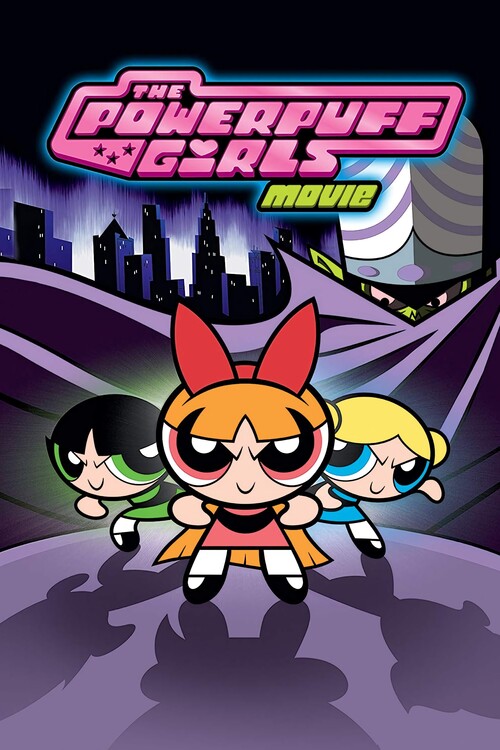
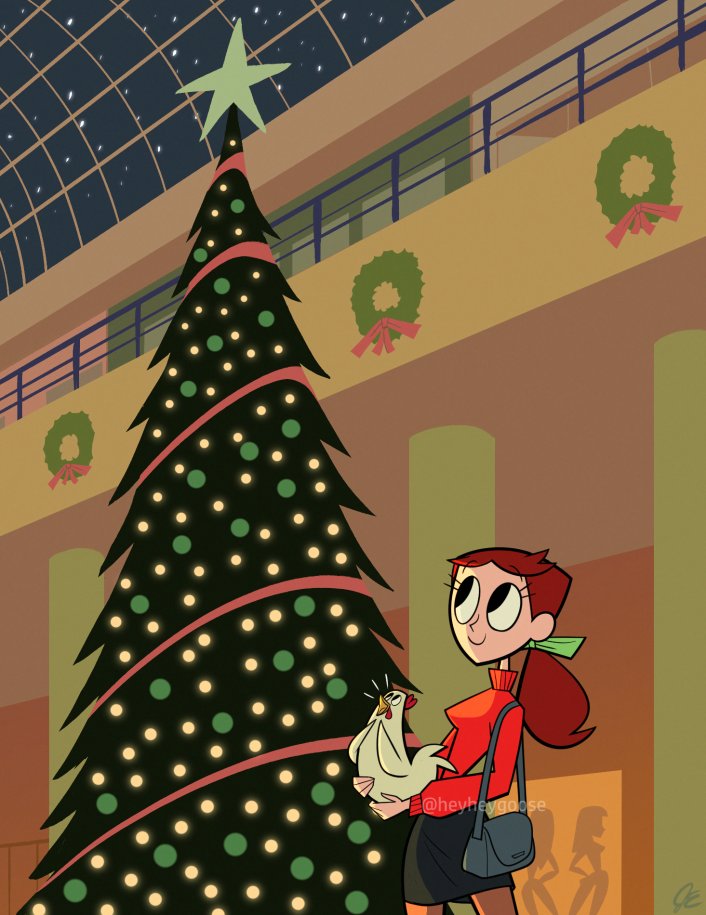
The art in my work is heavily inspired by 2000s cartoons with thick outlines and simplistic designs.
The 2000s cartoons seen here are of course: Dexter's Laboratory (1996-1998, 2001-2003), The Powerpuff Girls (1998-2005), My Life as a Teenage Robot (2003-2006), Clone High (2003)
These four were mainly cited as the main inspirations for KenMAZU95’s art style; among others, they also share the similarity of being inspired by an animation studio that was founded by a few people who were on strike with the Mickey Mouse studio…
What is UPA?
UPA was founded in 1941 as Industrial Film and Poster Service by a few former Disney animators, Zack Schwartz, David Hilberman, and Stephen Bosustow.
The studio came as a result of a strike at Disney in 1941. People such as John Hubley, a former long-time animator at Disney, were tired of the very realistic art style Disney had been using for some time.
So several people, such as former animator for Leon Schlesinger Productions (Later WB Cartoons) Bobe Cannon, joined the new company, trying to get their cartoons to stray away from the realism that was common in many of Disney and other animation studios’ works (Such as Looney Tunes/Merrie Melodies, MGM Cartoons, Later Fleischer, etc.)
The studio was relatively small compared to other studios by the 1940s, and one of their very first cartoons was Hell-Bent for Election (1944).
That cartoon was basically a presidential campaign advertisement for FDR; World War II was still going on. FDR was still in his third term, the only time a US President had one, and certainly the only one with a fourth, which was short-lived due to his death in 1945; after that, no more third or fourth terms for US presidents thanks to the 22nd Amendment.
But of course, fast-forward to after the war, Industrial Film and Poster Service became United Productions of America (UPA); it’s a way better name than what they used to call themselves for sure.
This was around the time that Columbia Pictures became their distributor, but initially Columbia wanted UPA to use their old characters from their former animation studio, Screen Gems. UPA had to make new shorts in The Fox and The Crow series.
They only made three of these, and even then, they just started doing their own thing after a while, and those Columbians at Columbia Pictures figured out that maybe those guys should do their thing instead of making Discount Looney Tunes.
After two of the three Fox and Crow cartoons, UPA created Mr. Magoo, the most iconic character from them. As a character featured in The Ragtime Bear (1949), he would become their own equivalent to Mickey Mouse or Bugs Bunny.
UPA would define their shorts with the simplistic art style you know them for, relying on limited animation, simple shapes, and basically being what a cartoon made by Picasso would look like.
The early influence of UPA
UPA cartoons had inspired so many artists at the time, such as Warner Bros. Animator Chuck Jones (who was moonlighting with UPA on Hell Bent for Election, by the way), along with others, including Disney animators Tom Oreb (who designed that one version of Mickey Mouse for several commercials), Ward Kimball, and Charles A. Nichols when they directed Toot, Whistle, Plunk and Boom (1953). Even Disney, the very studio that the UPA founders left to start their company in the first place, was inspired by them.
Tom Oreb:
Ward Kimball and Charles A. Nichols
Chuck Jones put a lot of very UPA-like stuff into his work, even before UPA got popular thanks to Maurice Noble’s abstract backgrounds. Granted, Chuck did some UPA-like stories while also still doing the funny animal cartoons you typically expect a Looney Tunes cartoon to be, despite the UPA artists being very against those kinds of cartoons.
Some of the best examples were:
Punch Trunk (1953)
From A-to-Z-Z-Z-Z (1954)
One Froggy Evening (1955)
One Froggy Evening in particular was considered his most famous short for a reason.
While this influence would get him fired by 1962 when working on the UPA movie Gay Purr-ee (1962), it proves that even UPA can influence someone who makes Bugs Bunny cartoons.
Influencing creators who were making cartoons during that time was only the beginning.
What if limited animation was the only option for certain companies only because they were on a budget?
Well, let's just say that’s exactly what happened when the Tom and Jerry creators, William Hanna and Joseph Barbera, decided to get into television animation after leaving MGM by 1957, leading to them founding Hanna-Barbera.
Hanna-Barbera’s cartoons are very limited in animation due to lower budgets, and because Bill and Joe realized that they both had to conform to a new model just from moving to TV alone.
They brought over their MGM guys with them, such as Kenneth Muse and Ed Benedict, to work at their animation studio. Focusing more on narratives with interesting characters as opposed to silent chase cartoons like in Tom and Jerry.
They found shortcuts such as giving a lot of characters something around their necks to separate their heads from the rest of their bodies so they can focus on one body part.
Other studios between the 1950s and 1970s known for their lower budgets, such as Rembrandt Films, Jay Ward Productions, and Filmation, to name a few, also relied heavily on limited animation (though I’d say some were less UPA-influenced compared to some others).
Regardless, UPA’s influence continued into the 60s despite UPA itself going through a major downfall since the box office bomb known as 1001 Arabian Knights (1959), which ended their relationship with Columbia.
The Downfall of UPA
That led to Henry G. Saperstein buying out UPA. This meant that the studio had to stop making short films in favor of making TV cartoons (like a Dick Tracy cartoon, for example), but they would make their second and final movie.
Gay Purr-ee (1962)
This was a movie written by Chuck Jones and his wife Dorothy.
Jones was still under an exclusivity contract with Warner Bros. Cartoons during 1962, and as long as Warner didn’t find out that Chuck Jones was making an animated feature film with an outside studio, he should be fine… and it turns out he got caught as soon as it became clear that Warner Bros. became the distributor for Gay Purr-ee.
Unfortunately, not only did Chuck Jones get fired from Termite Terrace, but the film bombed at the box office, and it was the beginning of the end for UPA.
Two months after Gay Purr-ee hit theaters, Mr. Magoo’s Christmas Carol aired on NBC on December 18, 1962, a staple of many Christmases. The final cartoon made by UPA was Uncle Sam Magoo in 1970; after this, was them doing nothing but release Kaiju films and license out Mr. Magoo to other studios.
UPA Influence in the late 90s and 2000s
Fast forward to the 1990s, UPA has more or less fallen into obscurity by the early 90s. The only platforms really airing UPA’s cartoons were Nickelodeon’s Cartoon Kablooey or syndication (including Disney Channel or USA Network) whenever the Mister Magoo Christmas Carol aired.
But some animators have grown to like UPA, and those animators were three classmates that shared a dorm room at CalArts:
All three of them would have UPA as a major influence in their works. So, when Hanna-Barbera needed new animators in the 90s to put the three guys who shared that dorm room to work on 2 Stupid Dogs, this was gonna be a show that would look very much like a throwback to UPA while also looking brand new at the same time.
The show was created by Donovan Cook and was the first brand-new production under Fred Seibert when he first became president of Hanna-Barbera in 1993.
Previously, Fred Seibert was known for partnering with Alan Goodman on giving MTV its iconic logo and “I want my MTV” slogan, while they were working at Warner-Amex Satellite Entertainment. They left to establish Fred/Alan, a graphic design agency that did a lot of work on several channels, with the very first client of theirs being MTV.
Not only had they helped MTV get its iconic iconography, but they also reinvented Nickelodeon’s onscreen image by giving it its iconic orange splat by 1984.
Fred Seibert and Alan Goodman would agree to shut down Fred/Alan not long before he became president of Hanna-Barbera, which by then was just bought by Turner Broadcasting, trying to start a brand new 24/7 cable channel airing nothing but cartoons, Cartoon Network.
In order to find pilots for the new channel that at this point was known for airing mostly the pre-August 1948 Looney Tunes/Merrie Melodies cartoons, MGM Cartoons, Popeye cartoons from Fleischer and Famous Studios, and Hanna-Barbera shows. Fred decided to start up a brand new animation showcase series that would have shorts that could serve as pilots for an eventual series. It was called “World Premiere Toons/What A Cartoon!”, and so, Craig and Genndy were the first two whose cartoon shorts aired on the show.
Craig McCracken’s short was “The Powerpuff Girls: Meat Fuzzy Lumpkins”, and Genndy Tartakovsky’s short was “Dexter’s Laboratory: Changes”, and Rob Renzetti’s “Mina and the Count”
Two-thirds of the three shorts were greenlit into becoming Cartoon Network’s Cartoon Cartoons. Mina and the Count wasn’t greenlit, but Rob had involvement in both Dexter and Powerpuff when those both got greenlit.
The animation style for Dexter’s Laboratory might’ve been the third show to use what has since become the “UPA Revival” art style, after 2 Stupid Dogs and, I believe, the Dumb and Dumber cartoon (at least as far as my knowledge goes).
But it was the first really notable show to use it; with the pilot episode, while very loose in animation, it would evolve into the flatter art style gradually when Dexter’s Lab was greenlit into it’s own show in 1996.
By Season 2, they simplified the style enough for ease of animation while still looking good at the same time. This is where I think they perfected the art style, if you want my opinion. While Season 1 does look good, it’s Season 2 where I tend to look most for inspiration.
The Chris Savino Seasons maybe the most inspired by the UPA style, but I am one of those people who prefer the older look of the series. Might as well use two similar screenshots from both Season 2 and Season 3.
Dexter’s Laboratory’s initial run of two seasons was when Genndy Tartakovsky was in charge of the show. So Genndy decided to end the show with the original finale being “Last But Not Beast” (Season 2 Episode 39, 1998). Though the show did come back for two seasons with Chris Savino as the showrunner, as I said, the show in those seasons was inferior to the Tartakovsky seasons.
The Powerpuff Girls (1998-2005) (Cartoon Network)
Cartoon Network had greenlit The Powerpuff Girls in 1998, not long after the end of Dexter’s Lab’s production.
What remained of the crew that worked on Dexter’s Lab at the time had moved over to The Powerpuff Girls, and those that didn’t have either been fired from Hanna-Barbera due to shakeups that were involving people that worked on Johnny Bravo (Butch Hartman and Seth MacFarlane would move to their own paths, for example).
Genndy became Craig’s right-hand man for The Powerpuff Girls while Rob would move along to the show.
I tend to look to the early seasons of The Powerpuff Girls for inspiration when it comes to my work.
Linda Simensky, the executive at Cartoon Network who helped bring them their most iconic shows of this time, including Dexter and Powerpuff, described the art style of The Powerpuff Girls as “Hanna-Barbera meets UPA,” and you can see the influence of both styles in Craig’s work; it helps that The Powerpuff Girls was a show animated by Hanna-Barbera when it was serving as Cartoon Network’s in-house animation studio.
The first season’s art style is probably my favorite look for the show, because I think it looked best when it looked this simplistic while also using their colors wisely.
A shoutout to Mime for a Change (Season 1 Episode 22, 1999). I always loved this episode, but the thing this episode helped me out with was for whenever I design backgrounds in my work.
The use of color in that episode in general happens to be a favorite part of mine.
Sometimes you don't need outlines, and let the colors and line art distinguish certain parts. The Powerpuff Girls especially helped with my background art in my work whenever I needed to design certain elements.
Of course, the first four seasons of The Powerpuff Girls were the ones that most people think of as the peak of the show, and once Cartoon Network made The Powerpuff Girls Movie (2002), the art style was given a major redesign.
The art style in the movie was the best possible first appearance of what would be used in the 5th and 6th seasons. I do prefer the older style of the previous seasons, but it’s absolutely better than what Dexter ended up with, and while yes, the later seasons of The Powerpuff Girls were also being shown by Chris Savino, the newer seasons didn’t look as bad as the newer Dexter ones did, in my opinion. Not saying there weren’t any bad episodes during this time.
Samurai Jack (2001-04, 2017) (Cartoon Network/Adult Swim)
Of course, it’s also notable that after the third season of Powerpuff Girls, Genndy Tartakovsky left to work on Samurai Jack, his second show for Cartoon Network and what many consider his best series.
Samurai Jack was a show that was like Genndy’s previous work in that it was influenced by UPA. It was also very different, not using outlines on its characters, and instead messing with the colors just enough to contrast the characters from the backgrounds. And from what I have seen, there are a lot of very UPA-looking scenes in the show, and it certainly works well with its futuristic environment, samurai-inspired action, and cinematic shots.
There are too many UPA parallels with Samurai Jack in general. But the first one was where I especially see UPA.
My Life as a Teenage Robot (2003-2006) (Nickelodeon)
Though, of course, if we can rewind a bit to 1997, Fred Seibert had been fired from Hanna-Barbera after Time Warner bought Turner Broadcasting, being among the several people who got fired from the animation studio around that time.
So Fred Seibert went over to Nickelodeon's animation studio to establish his own company, Frederator Studios
This was when Fred essentially pitched a very similar show to What a Cartoon called Oh Yeah! Cartoons.
Same concept: a showcase of animated shorts to be used as pilots to become animated series, and since this was Nickelodeon, the shows spun off from Oh Yeah! Cartoons would be Nicktoons like other original cartoons made airing on Nickelodeon.
The show was famous for being the series where ChalkZone and The Fairly OddParents also got their start. Rob Renzetti would go over to Nick to create his own cartoons over there.
He would even continue his Mina and the Count series over on Oh Yeah! Cartoons.
But making five more sequels to a cartoon that aired as part of Cartoon Network's What A Cartoon! wasn’t the only thing Rob would do, and yeah, Mina and the Count wouldn’t become the show he would be known for.
He would make 10 shorts for Oh Yeah Cartoons. Here's the list of Oh Yeah Cartoons that Rob Renzetti worked on:
The F-Tales (1998)
Ask Edward: All About Babies (1998)
A Cop and His Donut (1998)
Hubbykins & Sweetie Pie (1998)
Mina & The Count: The Ghoul's Tribunal (1999)
Mina & The Count: The Vampire Who Came to Dinner (1999)
Mina & the Count: Playing a Hunch (1999)
Mina & The Count: My Best Friend (1999)
My Neighbor was a Teenage Robot (1999)
Mina & The Count: Frankenfrog (1999)
The short "My Neighbor was a Teenage Robot" aired as the final segment to the 12th episode of Oh Yeah Cartoons' 2nd Season on December 4th, 1999.
The short features two brothers coming across a robot that behaves just like a teenager, under the care of a very strict yet loving scientist she has for a mother, but the one thing the robot has is a never-ending amount of features to fight crime, which she uses to keep an asteroid from hitting the Earth.
The short would become the one Oh Yeah Cartoons short that Rob Renzetti would use as a pilot when Nickelodeon greenlit it as “My Life as a Teenage Robot”
Rob Renzetti would of course still work with his peers at Hanna-Barbera/Cartoon Network Studios during this time, but once My Life as a Teenage Robot went into full production, it became his top priority.
When most cartoons get a series, chances are, most shows look better than their pilots, and Teenage Robot, in my opinion, is no exception. The generic environments were scrapped in favor of the Art Deco-esque futuristic setting that My Life as a Teenage Robot would become known for.
Characters were redesigned, and the use of digital ink and paint did the show many favors. It became one of my favorite-looking cartoons of all time for a reason.
The UPA influence had always been strong in Renzetti’s work, and Teenage Robot was no exception.
But there is a particular splash of Fleischer and Art Deco.
One method the show used that I especially loved was the color scripting.
The use of lighting in the show by changing the hue and saturation of the colors of the characters to create a certain mood has always been a favorite part of the show’s art style for me.
On top of another method the show used was the simplified character designs when they are at a distance.
The show was one of the more obvious inspirations in my work, given that I am someone who has a blue-haired robot for a character as well.
Clone High (2003) (MTV/Teletoon)
And no, the UPA influence in the early 2000s wasn’t limited to cartoons made by Genndy Tartakovsky, Craig McCracken, or Rob Renzetti.
The influence found it’s way into Phil Lord, Christopher Miller, and Bill Lawrence.
Before the show aired on MTV, it was originally pitched to Fox.
Originally the show was gonna have designs that looked a little more realistic.
The early design for Joan gives me vibes of MTV's Downtown.
But even later into it's development, you'll see the UPA influence start to appear.
The show would be animated by Nelvana, a well-known animation studio in Canada.
This would not only make it an MTV show, but also a Teletoon show, as Nelvana was also owned by Corus Entertainment in Canada.
The show would first premiere on January 20th, 2003 on MTV (November 2nd, 2002 on Teletoon's Detour Block)
The show was heavily inspired by UPA’s art style for the one season it aired (yes, the show came back for two seasons on HBO Max; I am aware of that). The show would go on to garner a cult following despite the show being short-lived due to MTV cancelling it after protests in India over the characterization of Gandhi, the show’s comic relief and a fan favorite. Regardless, it was a show that influenced a lot of artists later on.
Total Drama, for example, has an art style that borrows from Clone High’s version of the UPA aesthetic.
The major difference between Total Drama and Clone High in terms of its art style is that while Clone High was digitally inked and painted (in the first season at least), Total Drama was animated in Flash, as it became the case for many of Nelvana and other animation studios in Canada.
The Third Generation UPA Style
While there are other shows in the 2000s that are at least UPA aesthetic-adjacent, like The Fairly OddParents, for instance, the UPA Revival style had more or less slowly fizzled out before 2010 more or less.
Though that wouldn’t stop reruns from airing many of the cartoons with a UPA-like art style, meaning that a new generation could be influenced by these cartoons the same way. Many years later, a lot of the kids that grew up in the 2000s on Nickelodeon and Cartoon Network have since grown into becoming artists in of themselves.
UPA even continues to be loved by a lot of animation enthusiasts, not to mention the aforementioned 2000s kids found themselves making their own cartoons inspired by the UPA Revival cartoons.
Murphy and Mitzi (2019-Present) was a webcartoon and webcomic created by AJMarekArt on Twitter and other platforms, His series is not only a Y2K aesthetic-inspired cartoon, but given that cartoons such as Dexter’s Lab and Powerpuff Girls were airing on Cartoon Network during 1999-2000, where the show takes place, you can tell this was made by someone who is heavily nostalgic for that time period.
The internet has paved the way for these creators to put their passion projects on full display for people to see without getting approval from TV execs.
It was also very clear that more people would show off their very UPA-revival inspired works on the internet. Artists include:
lolwutburger
tehnutball:
FrederickArt:
Heyheygoose:
Fizzizz:
And the list goes on...
Impact on KenMAZU95
I was someone who, like them, grew up with old-school Cartoon Network shows such as Dexter’s Laboratory and The Powerpuff Girls.
As I was growing into my teens, I was not really taking my art too seriously so much as making my early TTS work, such as the pre-Vlare RoboFreaks videos.
Designs in them looked like this:
It didn’t look that good, but needless to say, that was the design I made back in 2015. And after a few years, I would improve my art style.
There were attempts to replace this design in 2019 once I started to take my art seriously when I made my earlier comic series: Phanto.
This was my first comic series before Sinikka’s World; I made as many as 22 comics (which Sinikka’s World has been well past that for some time).
This comic looks the way it does maybe because I sketched it out, traced over the drawings with Sharpie, and scanned them while also digitally coloring them afterward. I have moved past that process in favor of just using Krita with my drawing tablet by 2020.
Once I created the Kaeri Tertis and Sinikka Jacinth characters in 2020, I was trying to learn Krita, but it was gonna be a bit before I eventually mastered some aspects of my art style.
For example, something from 2021:
I was trying to aim for a vague UPA-like style, but it seemed a bit too realistic for my liking, and I improved in 2022 when I started the Sinikka’s World comic series:
The second Sinikka’s World comic
I was not entirely committed to that art style… not yet anyway, if you can’t already tell, as I was obsessed with adding a bit of attention to detail with the characters at the time.
Here is the final art from 2023 and the final time I used the old art style for Sinikka’s World
After this, I was tired of how this style had turned out, so at the beginning of the year, I wanted to redesign my characters and try to fully commit to the UPA-like style I was trying to aim for by the beginning of 2024.
This was the first time I fully commited to simplifying my characters enough to get a UPA-like look for them.
As 2024 had continued, the influence had fully shown up after some time.
Then after that, I started making comics again, now completely committed to that art style while also still sticking to my own strengths as an artist.
Here are several very obvious times I payed homage to the UPA Revival look in Sinikka's World:
You can say the same for some of the Zaxleon art as well
In a sense, I, along with many artists on the internet, have since been influenced by the art styles of creators like Genndy Tartakovsky, Craig McCracken, and Rob Renzetti, the same way UPA influenced them in the first place.
This art style is going to be an influence on someone in the future, given that it influenced many creators since the beginning when it started with artists like Chuck Jones, who himself was an influence on many creators thanks to his many Looney Tunes.
While UPA’s style had faded away in popularity in the 60s, it can never truly die, as people brought it back into prominence in the late 90s-2000s, and here we are now with the 2000s kids all grown up making cartoons with a UPA-esque style.